"At these schools lower class students are a distinct minority and, in some cases, an invisible one" ... “The working-class student feel pressured not to differentiate him or herself, but to conform to a middle-class academic norm by observing, quietly, both in the classroom and socially, to avoid revealing a lack of academic preparation or awkward details of a personal nature” (DiMaria 62 & 63).
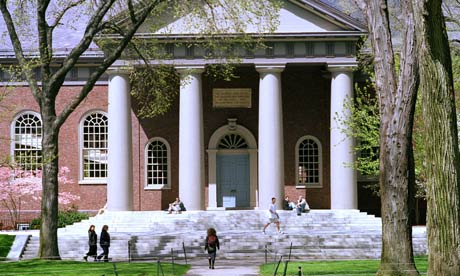
Before taking Soc 155: Class and Culture, discrimination to me was simply based on race and skin color. I never really thought of the idea of discrimination against an entire class of people. For me this was easy to assume because of the fact that a lot of the people I grew up with and went to the same schools with were from the same class. I felt blinded by the fact that there was so much homogeneity in my previous social space that I could not see the inequality which affected my community in comparison to the rest of America. The riches that I have encountered since the start of my college career at Harvard has been beyond my imagination. This type of class and status inequality has opened my eyes to an entire new world of discrimination.
Coming to college, it was overwhelming to be exposed to so many different cultures from all over America and the world. However, because of the people that I had initially surrounded myself with, I thought that my inability to relate with others was due to my own ethnic cultural roots than an effect of class. After meeting other individuals later on who were from the same class status but of different ethnic groups and from different parts of America, I started to realize that it was more than a race issue, that this inequality was more due to the fact that we were from a lower class background. I could relate to these individuals better and we faced similar struggles at an institution like Harvard. As one of the best schools in the world, the focus on middle and upper class culture was even more apparent. As DiMaria said, " she argued that attending to the special circumstances of lower- class students brings to the fore the many ways in which the nation's diversity rhetoric continues to gloss over certain forms of cultural difference, and continues, in an unreflective manner, to advance the middle-class ideology of the academy as the normative one" (62).


No comments:
Post a Comment